
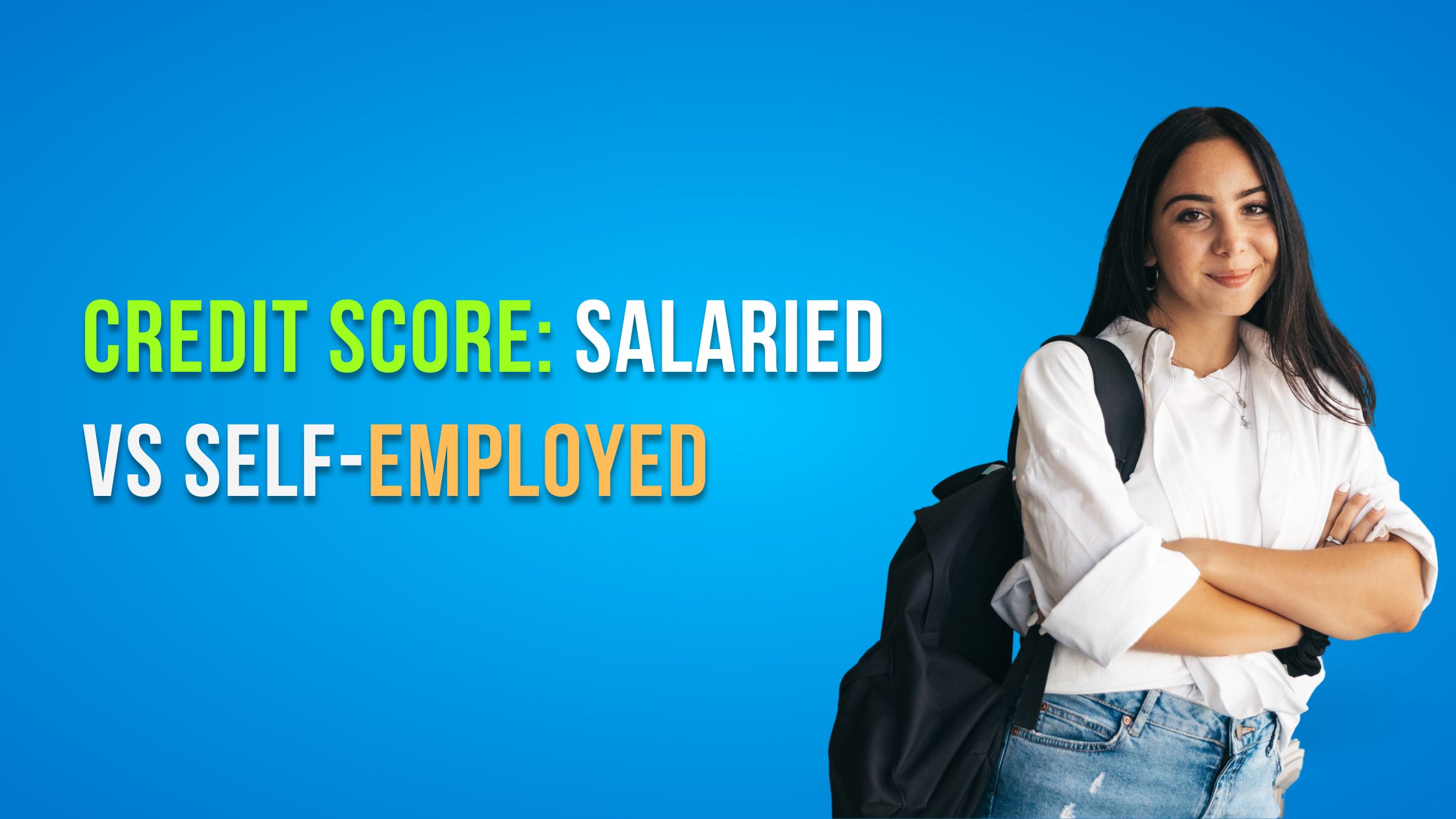
Taking a personal loan does not solely depend on your income. Lenders understand your past credit responsible behavior. That is why your credit score can be the negotiating point. The expectations are, however, not the same for all. One of the most common questions revolves around the improve your Credit Score Required for Personal Loan, as it directly influences approval chances, interest rates, and overall loan terms. Professionals employed on salaries and self-employed persons are evaluated differently, particularly in matters of risk.
This difference can be used to your advantage to prepare better and increase your chances of approval. Having clarity on this early helps you avoid unnecessary rejections and approach the process with more confidence and preparation.
Table of Contents
ToggleWhy Do You Need a Credit Score for Personal Loan Approval?
A majority of lenders like applicants who have a score of 700 and above. When you have a score of over 750, chances are high that you will be in an advantageous position of getting better interest rates and easy approvals.
When individuals are searching for the Credit Score Required for personal loan they are usually searching for a specific number. As a matter of fact, lenders look at your complete profile. Nevertheless, your score becomes the initial filter, and it tends to influence the way the rest of your application is perceived.
Reasons Why Credit Score is Important
Your credit score indicates your financial stability in the long run. It informs the lenders of the manner in which you pay in a regular fashion and how you handle the borrowed money. That is why understanding why the credit card cibil score required is essential:
1. Payment History – A track record of repaying on time is a sign of reliability and financial discipline, which makes the lenders feel comfortable that you will not default on future loan repayments.
2. Credit Utilization – Using the little credit you have available and making sure that you do not use it up would mean that you are borrowing responsibly and also that your lenders will be convinced that you are not purely dependent on credit facilities.
3. Credit Mix – A healthy combination of secured and unsecured credit accounts will prove that you will be able to use various kinds of borrowing in the future in a very responsible manner.
4. Inquiry Activity – There are cases where frequent loan or credit applications within a short time frame may be an indicator of financial burden; lenders are wary of giving new credit facilities.
Credit Score Requirements for Salaried Individuals
Salaried candidates are perceived to be less risky in most cases due to a predictable monthly salary. This stability provides the lenders with a little leeway when considering their applications.
- Stable Income – Monthly deposits of salaries give lenders an assurance of the repayment ability and thus applicants with marginally lower scores are assured of loans.
- Employer Profile – Association with a good company or a government agency might be helpful to your application, even offsetting a slightly lower credit rating.
- Score Range – A score of 700 to 750 is a normal mark of approval, and anything higher increases your chances of securing better terms for the loans.
Credit Score Requirements for Self-employed Persons
Self-employed applicants are usually evaluated more strictly because of the lack of income. This makes their credit score heavier.
1. Income Variability – Unstable monthly income is a risk factor and lenders will place more dependence on your credit to determine repayment reliability.
2. Financial Records – Your application will have to be supported with detailed documentation, like income tax returns, profit statements, and bank statements, to prove that your income is consistent.
3. Higher Threshold – The majority of lenders would like a score of 750 and higher in case of self-employed individuals, which would guarantee a high financial profile that balances income unpredictability.
Salaried vs Self-Employed: The Major Distinctions.
The factors can be easily compared:
Factor | Salaried Individuals | Self-Employed Individuals |
Ideal Credit Score | 700+ | 750+ |
Income Stability | Consistent | Variable |
Approval Flexibility | Higher | Lower |
Documentation | Minimal | Extensive |
Risk Perception | Lower | Higher |
What is the Role of Credit Card in Building Your Score?
One of the most powerful instruments in the making of your credit profile is a credit card. Lenders examine the way you spend and repay them closely. You may be asking when it comes to the credit card cibil score required, but it is not in terms of a specific number. Rather, it is a matter of how responsible you are in the use of your credit card.
1. Timely Payments – The ability to pay your credit card bills on time each month creates a great track record of repayment that would go a long way in enhancing your overall creditworthiness.
2. Low Utilization – Utilizing less than 30 percent of your credit limit will always indicate that you are not over-utilizing credit, which has a positive effect on your score.
3. Limited Applications – It is not advisable to apply for several credit cards in a short time because constant inquiries reduce your score and portray a negative financial status.
Mistakes That Lower Your Credit Score
Even minor financial mistakes may slowly ruin your score and influence the possibility of loans.
1. Missed Payments – Missing any EMI or credit card payment will adversely affect your score and stay on your credit report for a long time.
2. High Balances – Always maintaining large outstanding balances in your credit cards implies that you are straining, and the lender will doubt your ability to repay.
3. Frequent Applications – Applying several times for loans or credit in a short period of time generates hard inquiries repeatedly, and thus, this can lower your credit score and make it suspicious.
How to Improve Your Credit Score Before Applying
You do not have to make any drastic changes to improve your score, but you have to be consistent and pay attention to details.
1. Clear Dues – Clear off the pending balances and overdue bills through the earliest means to minimize your credit burden and enhance your repayment profile.
2. Maintain Discipline – Also, ensure that you will be making timely payments on all credit accounts, since regular payments over several months will slowly build up your credit score.
3. Monitor Report – Periodically review your credit report to check whether there are errors or inaccuracies and make corrections so that your score can reflect your true financial behavior.
Conclusion
Your credit score is an indicator of your financial practices and dependability. Your score is good regardless of whether you earn a salary or are self-employed, as this increases your chances of approval and assists you in securing more favorable terms of the loan. Knowing your credit score is what you need to get a personal loan, which provides you with clarity, whereas correcting your financial behavior provides you with control. Likewise, it is also helpful to know what credit card cibil score required, but it is your credit management that really counts.
FAQs
Q1. What is the minimum credit score required for a personal loan?
Ans. Most lenders prefer a score of at least 700, while a score above 750 increases approval chances and helps secure better interest rates.
Q2. Do self-employed applicants need a higher credit score than salaried individuals?
Ans. Yes, in most cases, lenders expect a higher score from self-employed individuals due to income variability and higher perceived risk.
Q3. Can I improve my credit score quickly before applying?
Ans. While instant improvement is unlikely, consistent repayments and reduced credit usage over 3 to 6 months can significantly boost your score.
Q4. Does credit card usage affect personal loan approval?
Ans. Yes, responsible credit card usage plays a major role in shaping your credit score and directly impacts your loan eligibility.
Q5. How many times should I check my credit score?
Ans. You can check your own credit score multiple times without affecting it, as these are considered soft inquiries.
Disclaimer
This content is intended for general informational purposes only. Loan eligibility, interest rates, and approval criteria vary by lender and individual financial profiles. Readers should consult financial experts or lending institutions for personalized advice.



Leave a Reply