
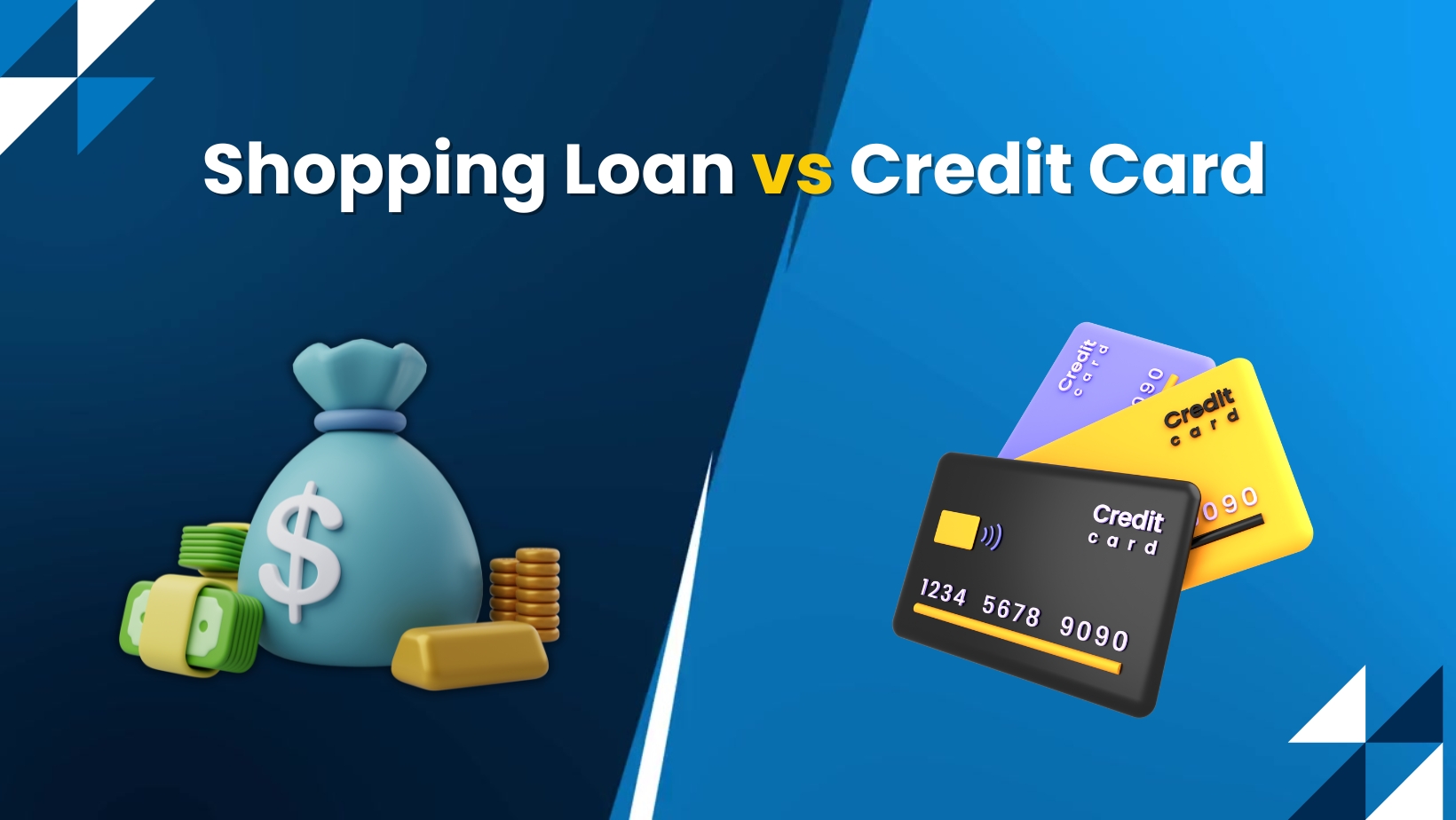
Shopping is a seamless experience shaped by factors like affordability, convenience, and effective financial planning. It happens to be more than picking products off a shelf. With major online sales, holiday deals, enhanced lifestyle requirements, and limited-time discounts, several individuals consider financing options for managing either big or unforeseen purchases. This is where the effective role of two of the most immensely popular choices comes into play – a shopping loan and a credit card.
Both of them offer individuals the flexibility to make a purchase now and pay later. However, they work in completely different ways. Comprehending the difference between the two plays a significant role, and it’s vital before you commit to any long-term financial responsibility.
If you are evaluating what you should opt for, a shopping loan or a credit card, we will help you choose the best option through this comprehensive blog. We will discuss how they work, their pros and cons, and which option will help meet your financial needs.
Table of Contents
ToggleWhat is a Shopping Loan?
A shopping loan, which is often referred to as a personal loan for shopping, is a short-term or medium-term loan specifically provided to finance retail purchases. Several banks, NBFCs, and fintech lending apps offer this loan for purchasing electronics, home appliances, furniture, fashion, and lifestyle products.
A shopping loan usually comes with fixed monthly installments, a predetermined tenure, and an agreed-upon rate of interest. What makes this loan attractive and highly preferred among individuals is that numerous lenders run seasonal offers with either low or even zero processing fees. In some scenarios, brands partner with lenders so they can provide no-cost EMI schemes.
Key Features of a Shopping Loan
- Fixed EMI Structure, ensuring planned and expected repayment.
- Instant Approval during peak seasonal festivities or online sales.
- Higher Loan Amount, useful for big purchases, such as appliances or gadgets.
- Clear Repayment Timeline, making budgeting easy and transparent.
What is a Credit Card?
A credit card is a revolving credit line, enabling you to buy items up to a fixed limit and repay either partially or fully every monthly billing period. If the full amount is cleared within the due date, you prevent any interest charges. However, if you pay only the minimum amount due, the balance attracts high interest, which is often 30% to 45% annually.
A credit card is a dynamic tool and remarkably convenient for online shopping, emergency purchases, day-to-day spending, and earning reward points.
Also Read this Blog: Loan for Clear Bills
Key Features of a Credit Card
- Cashbacks, Discounts, and Reward Points on partner brands.
- Revolving Credit allows consistent use as long as you clear outstanding debts.
- Perfect for smaller and frequent purchases.
- Interest-free Grace Period of 45-55 days.
Shopping Loan vs Credit Card – How Do They Compare?
While these financial tools seem to be similar in the beginning, their fundamental mechanisms vary considerably. Let us take a closer look at a closer comparison to help you choose sensibly:
Interest Rates
Shopping Loan: Interest rates are typically lower compared to credit cards. This is especially true when promotional deals or no-cost EMIs are offered by lenders. Rates differ depending on the lender. However, they remain fixed throughout the tenure.
Credit Card: If you don’t make a full bill payment on time, credit card interest rates can be awfully high. When you miss a payment, it attracts penalties, which makes the total cost higher compared to a shopping loan.
Winner: Shopping Loan – a perfect solution if you are looking for cost-effective and predictable monthly payments.
Repayment Flexibility
Shopping Loan: It comes with a fixed tenure, which ranges from 3 months to 2 years. You can make loan repayments via EMIs, which do not affect your monthly budget.
Credit Card: It enables you to make the bill payment in full or a part. Minimum payments offer flexibility; however, they can result in a heavy burden of interest.
Winner: It’s a tie – discipline vs flexibility depending on your spending habits.
Shopping Loan: Fintech lenders offer rapid, instant approval on a personal loan for shopping.
Credit Card: Once you have a credit card, the purchasing process is instant. Moreover, there’s no additional approval required for each purchase.
Winner: Of course, a credit card is the winner for its unparalleled convenience.
Spending Discipline
Shopping Loan: Because the loan is intended for a single purchase, you are unlikely to overspend.
Credit Card: Easy swiping can result in impulse purchases, overspending, and debt if not handled with caution.
Winner: Shopping Loan for its controlled spending.
Eligibility & Documentation
Shopping Loan: Documents while applying for a shopping loan may include basic KYC, income proof, and ID proof. Some lenders offer loans for small amounts without proof of income.
Credit Card: A credit card requires a candidate to have a steady income, good credit score, and KYC documents. Approval criteria are usually stringent compared to several instant shopping loans.
Winner: Shopping Loan, especially for individuals borrowing the funds for the first time.
Rewards & Benefits
Shopping Loan: Typically does not provide cashback advantages or reward points.
Credit Card: Offers rewards, discounts, travel benefits, loyalty points, and seasonal refund offers.
Winner: Credit Card! It is a practical and outstanding solution for increasing savings.
What is a Duet Card?
If you are exploring certain credit options, you may have learned about the term “Duet Card.” A Duet Card is a type of co-branded or dual-benefit card. It is offered jointly by a reputable lender and a retail partner. One of the best things about this card is that it usually provides significant advantages of a debit and credit card merged or special shopping benefits with specific partner brands.
These cards may consist of the following features:
- Exclusive shopping discounts
- Easy EMIs on various partner products
- Loyalty perks and reward points
- Cashback on select categories
A Duet Card can prove to be beneficial if you often shop from partnered merchants and are looking forward to extra savings or privileges.
Which of the Two Should You Choose?
Taking your pick from a shopping loan vs credit card largely depends on various factors. These include budget behaviour, purchase amount, financial comfort, and timely repayment habits.
Opt for a shopping loan if:
- You prefer fixed monthly installments and competitive interest rates.
- You want to avoid revolving credit and overspending.
- You are looking to make a high-value purchase.
- You don’t have a credit card, or you don’t meet approval requirements.
Opt for a credit card if:
- You shop often and are looking for cashback or rewards.
- You need a dynamic, flexible tool for diverse expenses.
- You are looking for instant approval for making purchases without extra documentation.
- You can make bill payments in full every month without fail.
The Balanced Approach
Several consumers reap various benefits from using a shopping loan and a credit card. A credit card is most effective for small purchases, rewards, and routine spending. A shopping loan, on the other hand, is a perfect solution for planned big purchases, requiring structured repayment.
Final Thoughts
When you are evaluating between a shopping loan and a credit card, the choice you make depends on purchase size, financial behaviour, and financial capacity to repay. A personal loan for shopping offers predictability and a competitive interest rate on large purchases, while a credit card delivers matchless convenience and rewards, given that you manage repayments sensibly.
Disclaimer
The information in blog is for general awareness only and should not be treated as financial advice. Eligibility, interest rates, charges, and benefits vary across lenders and card issuers. Readers should verify details with official sources before choosing any borrowing option. The content does not guarantee approval or specific financial outcomes. Always assess your personal financial situation and consult a qualified advisor before making borrowing or repayment decisions.
FAQs
1. Are Shopping Loans More Cost-Effective Than Credit Cards?
Ans. Absolutely! A shopping loan usually has a lower fixed interest rate compared to a credit card. This is especially true if you don’t pay your card bill in full.
2. For Major Purchases, Which Option Offers Better Value – A Shopping Loan or A Credit Card?
Ans. A shopping loan is highly recommended for large purchases due to structured EMIs and lower interest rates. As a result, it makes loan repayment effortless and more predictable.
3. Can I Convert My Credit Card Payments Into EMIs Instead of Opting for a Shopping Loan?
Ans. Of course, yes! Several credit cards offer EMI conversion. However, charges may be higher compared to dedicated shopping loans, depending on the bank.
4. Is Income Documentation Necessary to Apply for a Shopping Loan?
Ans. Some lenders offer small-ticket shopping loans without proof of income. Most lenders require basic KYC and limited financial paperwork.
5. What Is a Duet Card, And How Does It Benefit Users?
Ans. A Duet Card is a dual-benefit card that offers combined debit-credit features or partner shopping benefits. It helps you (if you are a frequent shopper) save more through rewards and exclusive discounts.


Leave a Reply